
To Refurbish or to Replace? That is the Question.
Posted by Lara Burke on Mar 13th 2026
KOMO CNC routers are known for their durability and long service life. Many machines remain productive for decades, which often leaves owners facing an important question: Should you refurbish your existing machine or invest in a new one?
Deciding between a CNC router refurbishment, CNC retrofit, or purchasing a new CNC router depends on several key factors. These include the machine’s mechanical condition, control system, production requirements, and the cost of upgrades compared to replacement.
Understanding these factors can help manufacturers maximize their equipment investment while maintaining high production efficiency.
Download The Retrofit Assessment Infographic
1. Start with a Mechanical Assessment of Your CNC Router
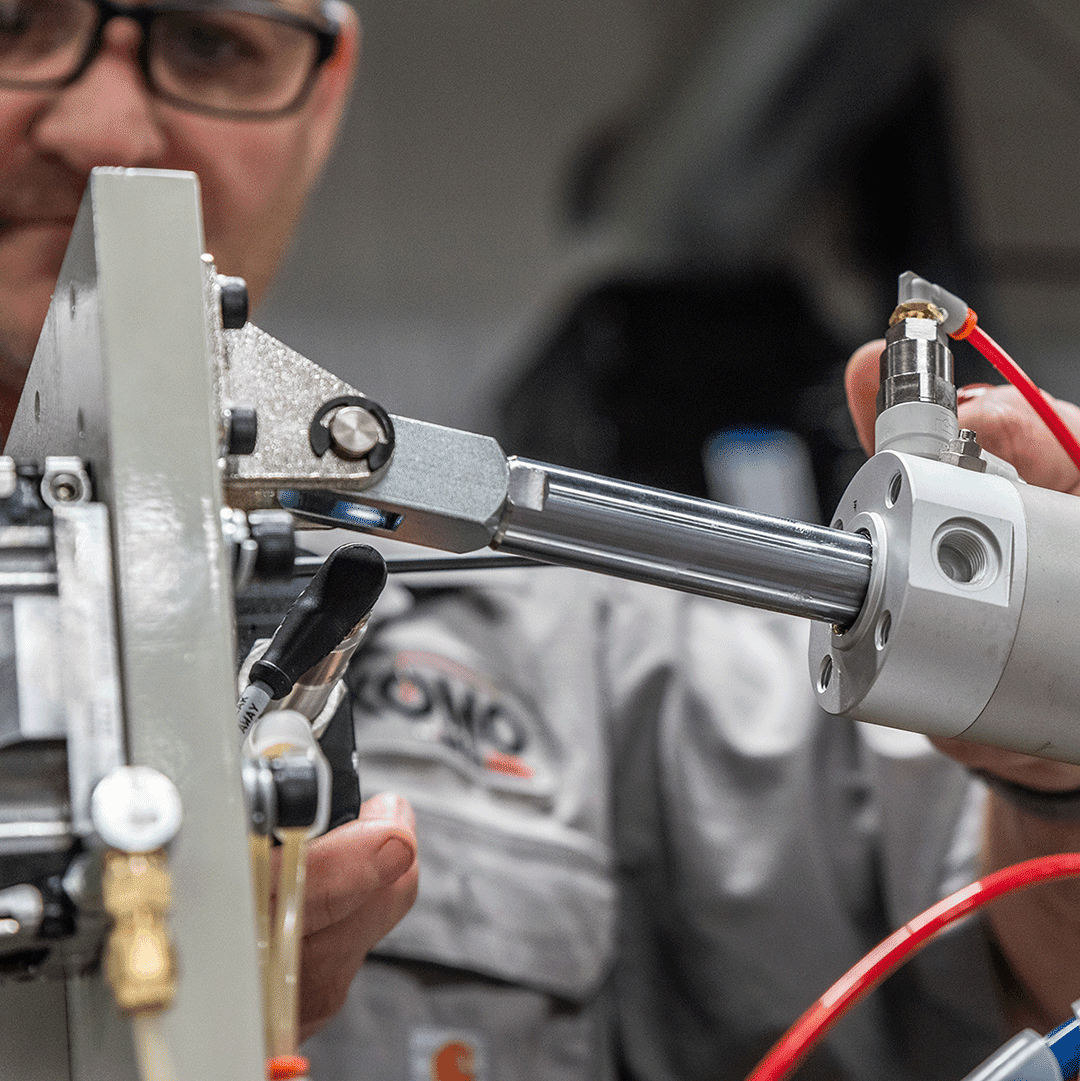
The first step to deciding whether to refurbish a CN router is evaluating the core mechanical components of the machine. These parts determine whether the foundation of the router is strong enough to justify refurbishment.
Begin by checking the spindle condition. Look for any play, unusual noise, or vibration during operation. Because spindle replacements can be expensive, the condition of this component often plays a major role in determining whether CNC router refurbishment makes financial sense.
Next, inspect the ball screws, bearings, and linear ways. Signs of excessive wear, backlash, or uneven motion may indicate deeper mechanical issues that could increase refurbishment costs.
It’s also important to evaluate the vacuum table, since leaks or uneven hold-down can affect cutting quality and consistency. Finally, review the drive motors and belts for signs of fatigue or declining torque output.
One of the biggest advantages of all KOMO CNC machines is its rigid frame construction. If the structural frame remains solid and true, refurbishment is often a highly viable option. A strong mechanical foundation can support new electronics and upgraded components for many additional years of production.
Often, the items mentioned above can be addressed and replaced with routine Preventative Maintenance.
2. Evaluate the CNC Control System and Electronics
Another key factor is the condition and support status of the machine’s control system.
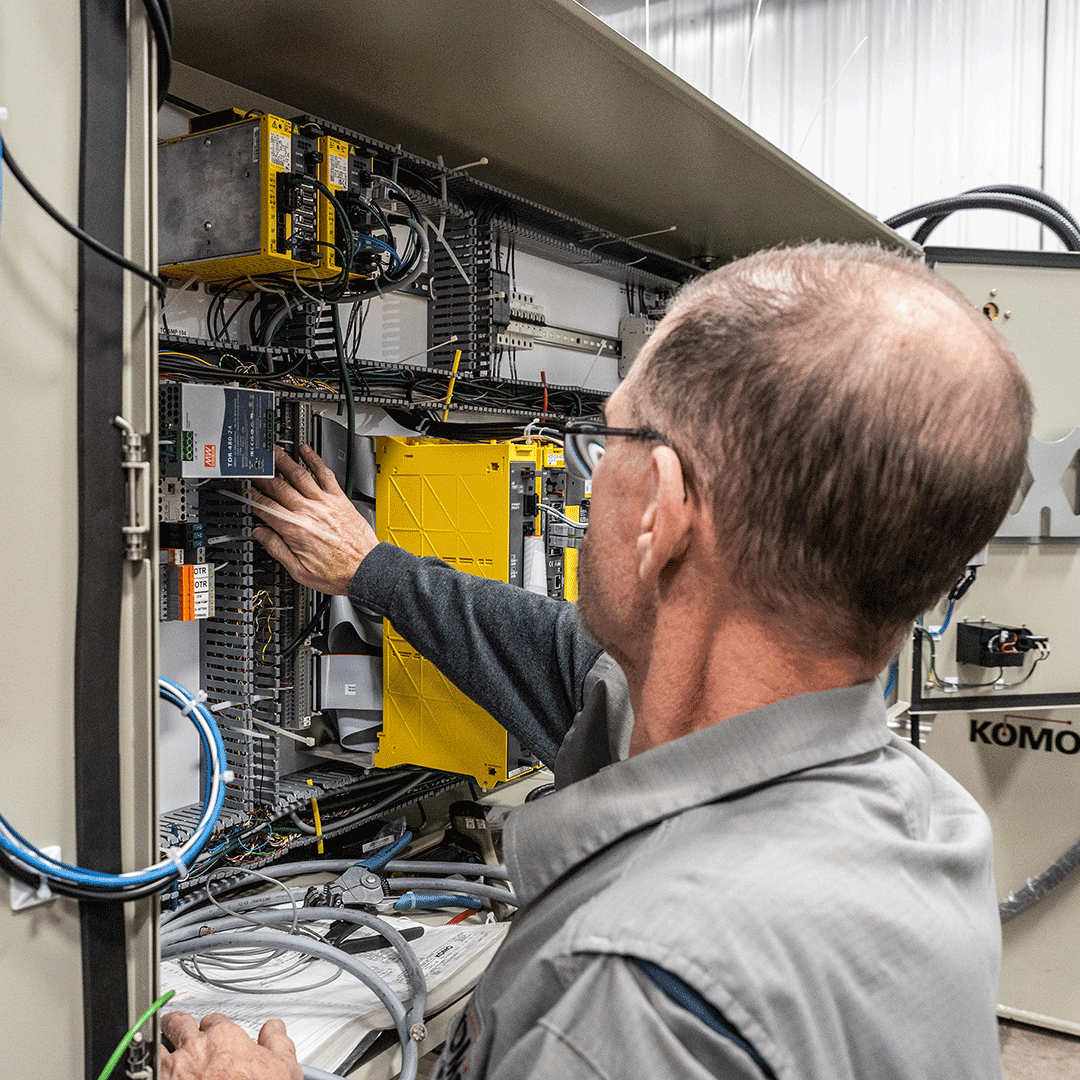
Start by identifying which CNC controller the machine is running then identify and whether it is still supported by KOMO. Older systems may become difficult to maintain if replacement parts are discontinued or technical support becomes limited.
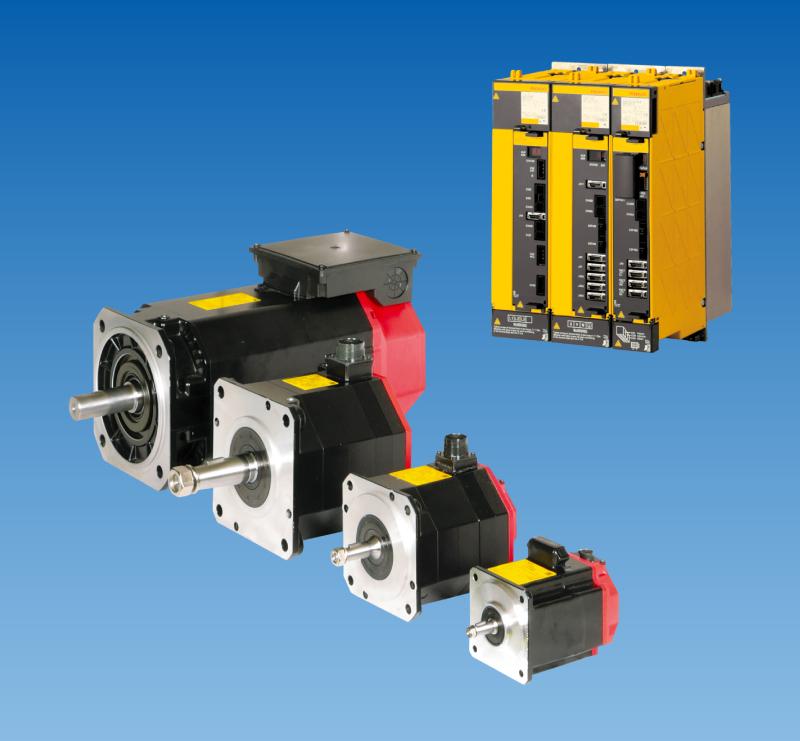
Fortunately, many shops extend the life of their equipment through a CNC control retrofit. KOMO offers modern CNC control upgrade packages that replace outdated electronics, wiring, and drives with current technology.
A CNC retrofit upgrade can significantly improve machine reliability, performance, and software compatibility—often at one-quarter to one-third the cost of buying a new CNC router. If you need help, contact us.
3. Compare Machine Performance to Current Production Needs
Even if a machine can be refurbished, it still needs to meet the demands of your operation.
Consider how your current system performs in areas such as:
- Cutting accuracy and repeatability
- Spindle power and speed
- Tool change capacity and cycle time
- Work envelope and table size
- Software integration with CAM systems, networking, and production data tools
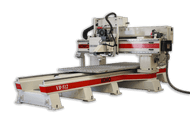
If your shop has expanded into higher throughput production, new materials, or automated workflows, an older machine such as the VR 510 Mach One may struggle to keep pace, even after refurbishment. In those situations, investing in a new system like the Mach III may provide a better long-term solution.

Financial analysis is often the deciding factor. Generally speaking, the costs fall into three categories:
4. Compare the Costs
Full Refurbishment
This typically includes new controls, wiring, drives, spindle upgrades, hoses, and full machine calibration. A complete refurbishment often costs 25–50% of the price of a new machine. If the frame and mechanical systems are in good condition, this option can deliver excellent return on investment.
Partial Upgrades
Some shops choose targeted improvements, such as upgrading the control system or replacing the spindle. These partial upgrades typically cost 10–20% of a new machine and can extend the life of the equipment for several additional years.
Purchasing a New Machine
A new CNC Machining Center represents the largest investment but provides full warranty coverage, the latest technology, and automation capabilities. For operations focused on maximizing productivity and minimizing downtime, a new machine may generate greater long-term value.
KOMO’s service team can assist with this decision by performing a Machine Evaluation and Retrofit Quote, providing a detailed inspection and line-item comparison of refurbishment versus replacement.
5. Consider Downtime and Service Support
Production downtime can be just as important as equipment cost.
Ask a few key questions during the decision process:
- How long will the refurbishment take?
- Will lost production during downtime outweigh the cost savings of refurbishment?
- Are replacement parts and service readily available for your current model?
If extended downtime would significantly impact your operations, purchasing a new machine may be the more strategic option.
6. Think about Resale and Long-Term Value
KOMO machines tend to retain their value exceptionally well. This creates additional options when upgrading your equipment.
A fully refurbished machine can continue operating productively for many more years, either in your shop as a secondary production unit or in another facility through resale. In some cases, if a machine is beyond economical repair, KOMO may also offer trade-in credit toward a new system.
Refurbish or Replace - What is the Answer?
Refurbishment is often the right choice if:
- The machine frame and motion systems are still in good condition
- Controls or spindles can be upgraded affordably
- The machine will meet your production requirements for the next 3–5 years
Purchasing a new machine may be the better option if:
- The controls are obsolete and replacement parts are no longer available
- The frame or axis systems show significant wear
- Your production demands require higher throughput, tighter precision, or advanced automation
Download The Machine Assessment Flow Chart
Carefully evaluating these factors can help ensure you make the right investment for your operation. Whether you choose refurbishment or replacement, the goal is the same: keeping your shop productive with reliable, high-precision CNC technology.
If you would like to discuss your options further, contact us.